
Shopify POS and the phygital revolution in fashion and luxury

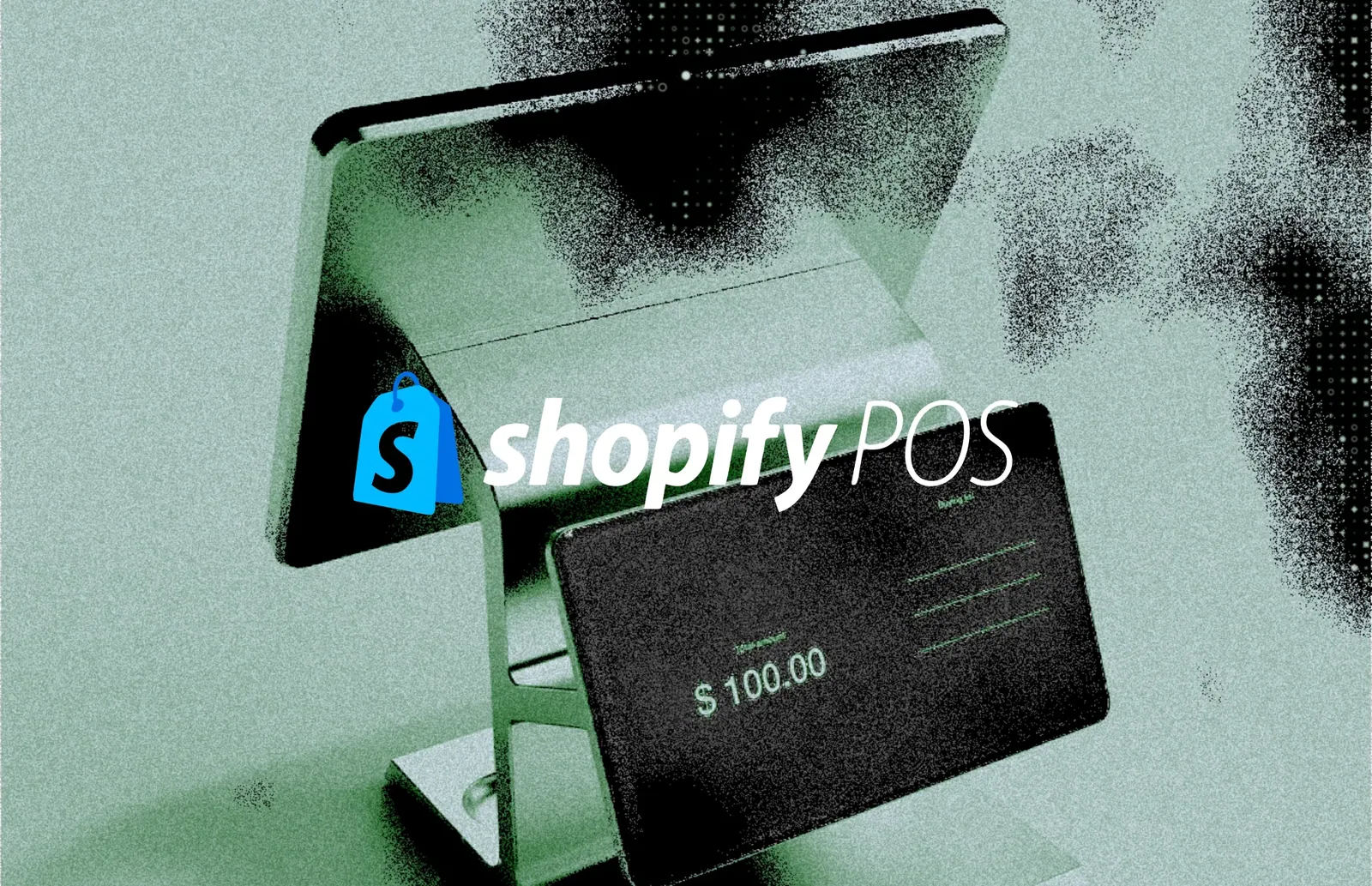



Shopify POS connects boutiques and online stores in one back office, with shared inventory, customer profiles and orders, so fashion and luxury brands can sell the same way everywhere.
Article
- Published
- Area
- Topic
- Reading time
- Written by
- 10 August 2026
- Creative Technology
- Retail
- 5 minutes
- Made in Evolve
Introduction
The boundary between physical retail and the online store has dissolved, and fashion and luxury brands can no longer ignore it. Today’s customer expects a smooth, highly personalised experience, with no separation between what happens on a phone and what happens in the boutique.
Managing this convergence, the phygital model, requires infrastructure that unifies applications, aligns inventory and orchestrates data on a global scale. For enterprise retail, the leading solution is Shopify POS. Made in Evolve, which has long built eCommerce for the fashion industry, uses it as the engine of omnichannel retail, designing sales ecosystems in which every channel works with the others.
01
The Shopify POS ecosystem
Shopify POS (point of sale) is Shopify’s central hub for in-store sales, in boutiques, pop-ups, physical headquarters or dedicated events. It is natively synchronised with the eCommerce infrastructure.
Staff work on a mobile interface (iOS or Android) connected to dedicated hardware: payment terminals, scanners, receipt printers and cash drawers. The real advantage lies in the unified back office: wherever the transaction takes place, inventory levels, CRM profiles and order histories are processed and updated instantly across the whole company network.
02
Strategic advantages for omnichannel brands
Adopting Shopify POS turns operational complexity into a competitive advantage.
- Centralised inventory: the unified architecture eliminates stock discrepancies. Inventory is updated in real time across all physical and digital channels, reducing the risk of overselling to zero.
- Shopping without borders: the infrastructure supports advanced omnichannel services, from click and collect (buy online, pick up in the boutique) and store-to-door (home delivery of an item not available in the store) to returns and exchanges across channels.
- Clienteling and profiling: the system captures customer data at checkout and brings purchase history and loyalty progress together in a single profile. Sales associates can recognise and look after high-value clients in any boutique in the world.
- Operational control and data: the platform allows granular permissions for retail staff and provides analytical dashboards on product performance and foot traffic, supporting decisions based on data.
Shopify POS in practice: Italian and international fashion
Several leading fashion and lifestyle brands have already chosen Shopify POS to unify their physical and digital sales.
In Italy, the brands using Shopify POS include:
- Slam Jam, the well-known streetwear retailer based in Ferrara;
- Velasca, a Made in Italy footwear brand;
- K-Way, the historic outdoor apparel brand;
- Alessi, an icon of Italian design.
Internationally, Derek Rose, a British luxury loungewear brand founded in 1926, shows the concrete effect of Shopify POS on physical retail. By unifying online and in-store operations, the brand doubled its number of stores in just three months, recorded a 7% revenue increase from selling online stock in store, and a 6% lift in cross-selling between locations.
Sources: Shopify Italy, Shopify case study, Derek Rose.
The results point to a clear pattern: fashion and luxury brands that adopt Shopify POS gain operational continuity and a measurable commercial advantage, with more available stock, higher conversions and stronger loyalty across channels.
03
Infrastructure, security and tax compliance
Security and stability rest on Shopify’s global cloud architecture.
- Operational resilience: the platform guarantees 99.9% uptime. Shopify POS also keeps working during network outages: in-store transactions are recorded offline and synchronised automatically once the connection is back.
- Global payments: through Shopify Payments, stores accept the main credit cards, debit cards and mobile wallets, with highly competitive fees.
- Italian tax compliance: the solution meets local regulatory requirements. Shopify POS hardware communicates directly with certified telematic cash registers (RT) to issue compliant electronic receipts.
04
Adoption incentives and scaling up
To speed up adoption, upgrading to the Shopify POS Pro plan currently unlocks specific commercial benefits. With the annual plan, and more than $10,000 USD in transactions through Shopify Payments within the first 90 days, the platform offers:
- free or heavily subsidised hardware, up to a value of $2,300;
- dedicated engineering support for migration and setup;
- a 25% saving on the annual subscription.
05
The international expertise of Made in Evolve
Implementing an enterprise POS system takes much more than configuring hardware: it means carefully re-engineering the company’s workflows.
Made in Evolve’s core business is designing digital architectures for fashion and luxury. We know how a fashion brand works: the structured management of variants and seasonal drops, the scalability needed during global traffic peaks, and an uncompromising attention to aesthetics.
We work with brands as a technology partner through:
- Architectural integrations: our scope goes beyond the Shopify ecosystem. We connect the POS to ERP systems, CRMs, OMS (order management system) platforms and in-store digital kiosks, keeping company data complete and consistent.
- Custom development: we build bespoke solutions and applications, together with third-party app integrations, to shape the POS around each fashion house’s operating procedures.
- Cross-border scalability: we design architectures for international expansion, managing multiple currencies, languages and countries from a single central hub.
06
Beyond the physical touchpoint
A POS infrastructure is only one part of an omnichannel strategy. As accredited Shopify Partners, our work does not end with the retail channel; it covers the brand’s whole eCommerce architecture.
We optimise online store performance, handle replatforming, evolve UI and UX and develop advanced architectures, with continuous technical support. This approach lets the online store and the physical flagships evolve together, on an ecosystem that can scale quickly across global markets.
The future of retail lies in an integrated phygital infrastructure, and Shopify POS is its engine.
In figures
- 3 months for Derek Rose to double its stores
- +7% revenue from selling online stock in store
- +6% cross-selling between locations
- 99.9% platform uptime
FAQ
What is the role of Shopify POS in the retail ecosystem?
Shopify POS (point of sale) is the software that handles in-store transactions for products catalogued on Shopify, bringing sales, CRM and inventory together in a single database. It is the technological bridge between the digital channel and the retail network.
How does it handle Italian tax regulations?
The architecture is fully compatible with Italian tax rules. It connects with the certified telematic cash registers (RT) on the market, so electronic receipts are issued smoothly and in compliance.
Does the system keep working during an internet outage?
Yes. Shopify POS has an offline mode that lets staff keep processing sales as usual. Once the connection is restored, the application aligns stock and sales data with the central back office on its own.
Does it support retail chains and multiple locations?
Yes. Enterprise versions such as Shopify POS Pro are built to coordinate several physical locations. They allow granular inventory control for each store, optimised transfers between boutiques and centralised reporting for every geography.
What is the effect on returns and exchanges?
An omnichannel approach removes logistical friction for the customer. With Shopify POS, someone who bought online can return an item or exchange a size at a physical flagship (or the other way round). The system reallocates inventory, refunds through the payment gateway and updates the customer history automatically, for a premium, uninterrupted service.
More articles
Generating eCommerce images with artificial intelligence
18.02.2026, Brand Direction
September to November: 27 top brands and 7 revelations
28.11.2025, Performance Marketing
The real problem with Black Friday? Nobody.
24.10.2025, Performance Marketing