
Web Accessibility: The Future of eCommerce is Accessible
The Evolution of Web Accessibility in Italy
In recent years, Web Accessibility has taken on an increasingly central role in the Italian and European digital landscape. Growing attention to online inclusivity has led to important regulatory developments that directly affect the eCommerce sector too, particularly fashion, where design and user experience are often at the heart of the strategy.
Web Accessibility isn't just an ethical issue: it's a set of practices, rules and technologies designed to guarantee access to online content and services for everyone, including people with visual, hearing, motor or cognitive disabilities. This approach translates into designing websites, apps and digital platforms that can be used effectively by anyone, without barriers.
Current Regulations and New Deadlines: What's Changing in 2025
The most relevant regulation for Web Accessibility in Italy is the Stanca Law (Law 4/2004), which requires Public Administrations to make their digital services accessible. In subsequent years, this obligation was extended to private companies with revenues over €500 million, under Legislative Decree 76/2020. But the real turning point will come on 28 June 2025, when the European Accessibility Act officially comes into force. From that date, all digital products and services placed on the market will need to be accessible in accordance with the WCAG (Web Content Accessibility Guidelines).
What Does the Accessibility Act Require?
- Extended application to private companies of any size, not just large enterprises.
- Accessibility requirements for websites, apps, ebooks, ATMs, self-service terminals, software and digital documents.
- Penalties and legal disputes for those who fail to comply, regardless of company size.

WCAG: The Reference Standard for Accessibility
The WCAG (Web Content Accessibility Guidelines) are the international guidelines developed by the W3C, which define the technical criteria for making web content accessible. Currently, WCAG 2.1 is the point of reference, but WCAG 2.2 is already available, expanding the number of criteria to cover new needs, particularly for users with cognitive disabilities and temporary impairments. WCAG is built on 4 core principles:
- The principle of perceivability refers to the ability to make content accessible through different modes, so that it can be understood by anyone, including people with sensory disabilities. This means, for example, adding alternative text for images, allowing blind users to understand what's shown thanks to screen readers. Similarly, audio content must be accompanied by subtitles or transcripts, so that deaf or hard-of-hearing users can also access the information. Perceivability therefore requires careful design that considers multiple channels of consumption and never assumes a single mode of perception.
- The principle of usability concerns everyone's ability to interact effectively with the digital interface. This means the site or app must be usable with different tools and in different contexts, ensuring functionality and access regardless of users' motor, visual or cognitive abilities.
A usable interface allows, for example, keyboard navigation without needing a mouse, facilitates interaction with voice commands, and clearly displays active elements such as buttons and links. The goal is to give everyone the ability to complete any necessary action, such as purchasing a product or filling in a form, without obstacles or frustration. - The principle of understandability focuses on the clarity and consistency with which information is presented and the interface is structured. Text must be written in simple, direct language, avoiding ambiguity, unexplained jargon or overly long sentences. The layout of elements must follow an intuitive logic, so users can easily find their way around and anticipate the consequences of their actions.
Visual or audio feedback must also be understandable: for example, a clear confirmation when a form is submitted, or an error message explaining how to correct an incorrectly filled-in field. Understandability helps make interaction safer and less stressful, especially for people with cognitive or language difficulties. - Finally, the principle of robustness concerns the ability of digital content to adapt and function correctly with assistive technologies available now and in the future. A robust site is built with semantic code that complies with international standards, ensuring compatibility with screen readers, voice browsers, alternative keyboards and other support tools.
It also means avoiding overly rigid technical solutions that depend on a single type of technology. Robustness therefore ensures that content remains accessible over time, regardless of changes in the devices or software used by users, preserving the effectiveness and inclusivity of the digital experience.
Each principle is broken down into success criteria, divided into three levels of conformance: A, AA and AAA. Level AA is the one required by most regulations, including the European one.

Who Does the Regulation Apply To?
From 2025, the regulation will apply to:
- Public administrations and publicly controlled companies.
- Private companies of any size that sell or provide digital products and services.
- eCommerce sites, mobile apps, online services, payment terminals, ebooks, banking platforms.
This is no longer an optional choice or an "ethical" requirement: compliance with Web Accessibility becomes mandatory by law.
The Consequences of Non-Compliance
Ignoring accessibility regulations can lead to several consequences:
- Financial penalties of up to 5% of global turnover for non-compliant companies.
- Legal disputes brought by users who feel discriminated against.
- Significant reputational damage, especially in sectors like fashion where image matters.
An inaccessible site can be reported to AgID (Italy's Digital Agency) or become the subject of legal action. It could also be excluded from public tenders or partnerships with organisations that require compliance with the standards.

Web Accessibility for eCommerce: Why Comply Now
In the eCommerce world, accessibility isn't just about regulatory compliance, it directly affects:
- Customer experience: an inclusive UX increases conversions.
- SEO: many WCAG practices also improve organic rankings.
- Brand value: an accessible site conveys care and respect.
- Audience: it opens up to millions of users with specific needs.
The Case of Fashion eCommerce
In the fashion eCommerce sector, where Made in Evolve has operated for over 15 years, design, aesthetics and performance must coexist with accessibility requirements. This isn't about limiting creativity, but about rethinking design intelligently, taking into account colour contrast, keyboard navigation, semantic code structure, text alternatives for images and clarity of content.
How Made in Evolve Approaches Web Accessibility
At Made in Evolve, we are already adopting new inclusive development concepts for all our eCommerce projects. Our approach is based on three core principles:
1. Inclusivity by Design
Every project is designed with WCAG 2.2 guidelines in mind right from the wireframe stage. Interfaces are designed to be intuitive, accessible and mobile-friendly.
2. Testing and Technical Validation
Our teams use advanced tools to test compliance with WCAG criteria, both automatically and manually. We offer accessibility audits, testing with screen-reader simulators, keyboard navigation simulations and semantic review of HTML code.
3. Integration into the Development Cycle
Accessibility isn't an afterthought: it's an integral part of the development cycle. We use modern frameworks and reusable components that comply with WCAG best practices.

Innovative Solutions for Accessible eCommerce
To make our projects compliant while staying at the cutting edge, we offer:
- Accessible design systems shared across teams and brands.
- Dark mode and high-contrast interfaces that users can enable.
- Focus indicators and native keyboard navigation.
- Dynamically managed text descriptions for images (alt text).
- WCAG-compliant custom components.
We work with technology partners and specialist consultants to take accessibility to the highest level, even in the most complex and creative projects.
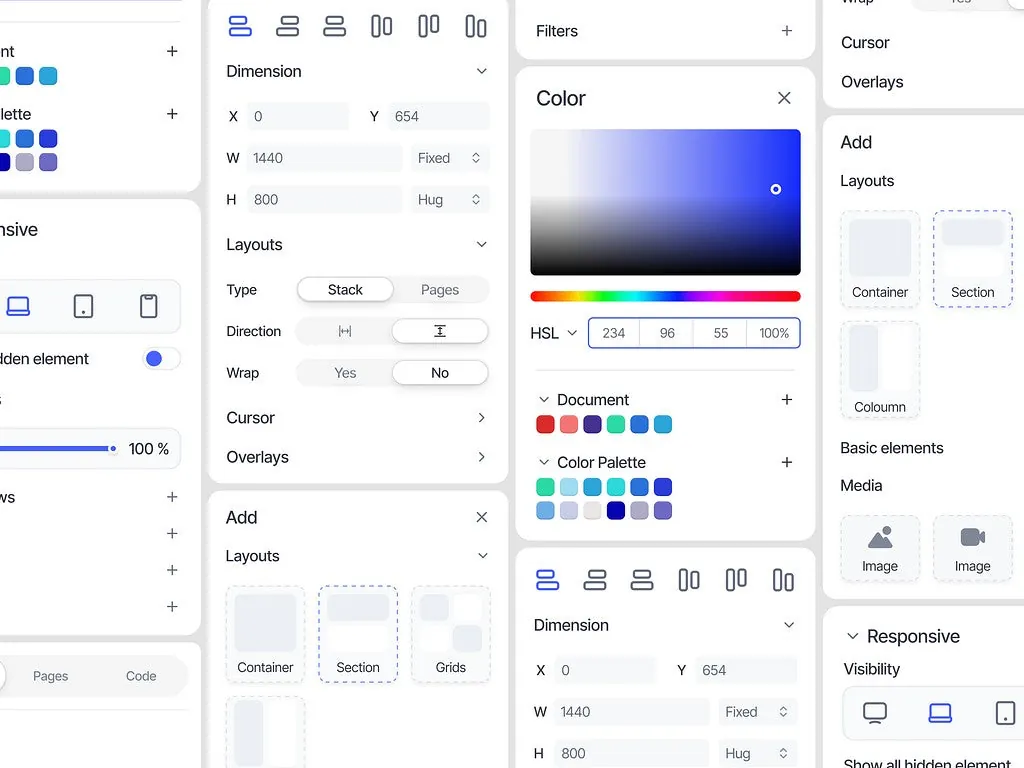
Web Accessibility as a Business Lever
Inclusivity as a Competitive Advantage
Investing in Web Accessibility isn't just a regulatory obligation, it's a strategic opportunity for digital businesses. A site designed to be accessible improves the user experience for everyone, not just people with disabilities. Clear structures, simple navigation, effective visual contrast and easy-to-read text reduce friction while browsing and increase the likelihood of conversion.
Adopting an inclusive approach also means expanding your potential audience: in Europe, over 80 million people live with some form of disability. To these we can add older users, people with temporary limitations (e.g. injuries, difficult environmental conditions), and those using alternative devices or slow connections. Making an eCommerce store usable for everyone effectively makes it more effective for every single user.
Loyalty is another key factor: people who find a site easy to use and inclusive are more likely to return and speak positively about the brand. In competitive markets like fashion eCommerce, attention to accessibility can become a distinguishing factor compared to the competition.
International Case Studies
Major tech companies like Apple and Microsoft have made accessibility a cornerstone of their strategy. Apple integrates native tools like VoiceOver into its devices, while Microsoft has created accessible guidelines and development tools for its products and cloud services.
In the United States, compliance with the Americans with Disabilities Act (ADA) has led numerous public and private sites to redesign their platforms to include accessible features. For example, the Marriott hotel chain optimised its online booking system to make it usable by blind users, improving the overall UX at the same time.
These examples show that accessibility and innovation can go hand in hand, strengthening brand value and improving digital performance.

The Benefits of Accessibility Even for Users Without Disabilities
Improved UX for All Users
Designing an accessible site means improving the quality of the digital experience for users without disabilities too. Clear information structures, readable text, clearly visible interactive elements and simplified navigation help all users find their way around more easily and complete actions quickly and effectively.
Consider, for example, older users who are less tech-savvy, or people browsing on the go with small screens or in unfavourable environmental conditions (direct sunlight, background noise, slow connections). In these cases, readable fonts, well-sized buttons and linear navigation paths reduce errors, drop-offs and frustration.
In a world where attention spans are short and online alternatives are endless, a simplified user experience is often the key to retaining visitors and guiding them all the way to conversion.
Improving SEO and CRO Performance
Many of the measures required by the WCAG guidelines also have positive effects on SEO (Search Everywhere Optimization) and CRO (Conversion Rate Optimization). For example, correct use of heading tags (<h1>, <h2>, etc.) helps search engines understand the structure of the content and improves indexing.
Adding alternative text to images (alt text) allows Google to better interpret visual content, making it accessible in image search results too. Semantic HTML code, besides ensuring compatibility with assistive technologies, makes it easier for crawlers to scan the site and improves loading speed.
A well-structured, clear and accessible site increases user trust and reduces drop-offs in conversion funnels, contributing directly to achieving business goals.
Towards a Barrier-Free eCommerce
Accessibility isn't just about compliance: it's a strategic choice that reflects the identity and values of a modern, conscious brand.
At Made in Evolve, we believe an accessible eCommerce store is also a more efficient, inclusive and future-oriented one. Every project is an opportunity to build a digital experience that's open to everyone, without compromising on design or performance.
The time to act is now. If you're planning a new store or want to improve your existing one, we can support you with expertise, tools and practical solutions.
Contact us for a personalised consultation and discover how we can help you create a truly accessible site, capable of welcoming every user and showcasing your brand.