Fashion Data: January–June 2025
Numbers that speak louder than words
Contents
- Not all data tells the truth
- Who really sells: brands and volumes compared
- The categories that drive revenue
- April tested us, but we learned something
- Private labels aren’t an alternative: they’re a strategy
- What it takes to stay standing in 2025
- Conclusion: selling isn’t enough, you need to say something
Not all data tells the truth
Made in Evolve is an ecommerce agency specialising in fashion.
Every day we work on Shopify, because today it’s the platform that best meets the need for stability, speed and scalability. We do this by integrating design, technology and marketing into one coherent, performance-driven flow. The data you’re about to read doesn’t claim to represent the entire market.
These are real figures, collected from around forty active stores that we manage directly, with full visibility into sales, flows and purchasing behaviour.
Who really sells: brands and volumes compared
In the real world, what counts isn’t who communicates best, but who sells the most.
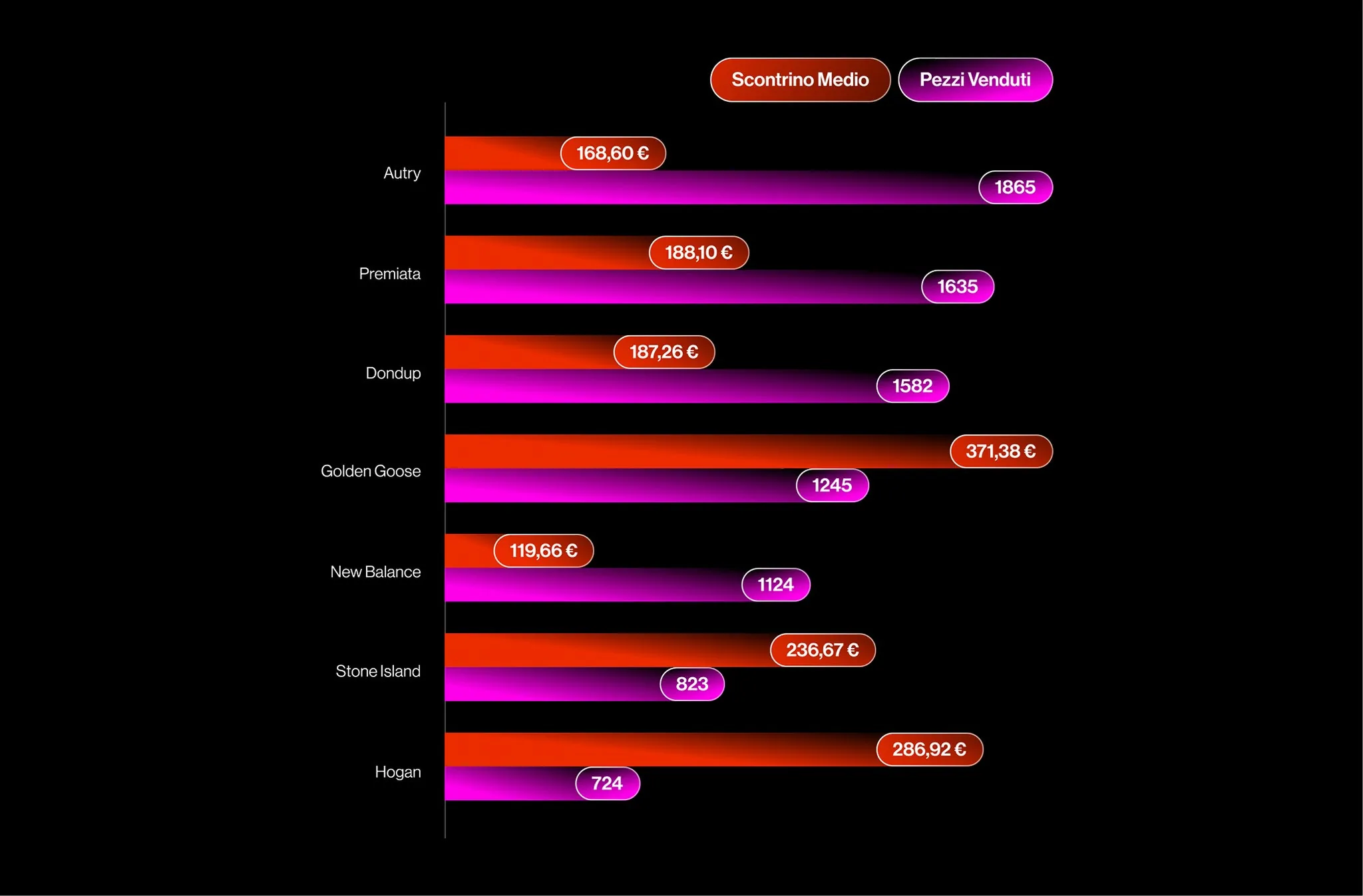
We ranked brands based on units sold and average order value, concrete data cross-checked from multiple operational sources.
Rank. Brand. Units sold. Average order value
Autry 1,865 units | average order value €168.60 — Premiata 1,635 units | average order value €188.10 — Golden Goose 1,245 units | average order value €371.38 — New Balance 1,124 units | average order value €119.66 — Stone Island 823 units | average order value €236.67 — Hogan 724 units | average order value €286.92
Note: Premiata’s performance is driven by very strong, well-targeted vertical merchants. It’s not an anomaly, but a validation of correct positioning.
The categories that drive revenue
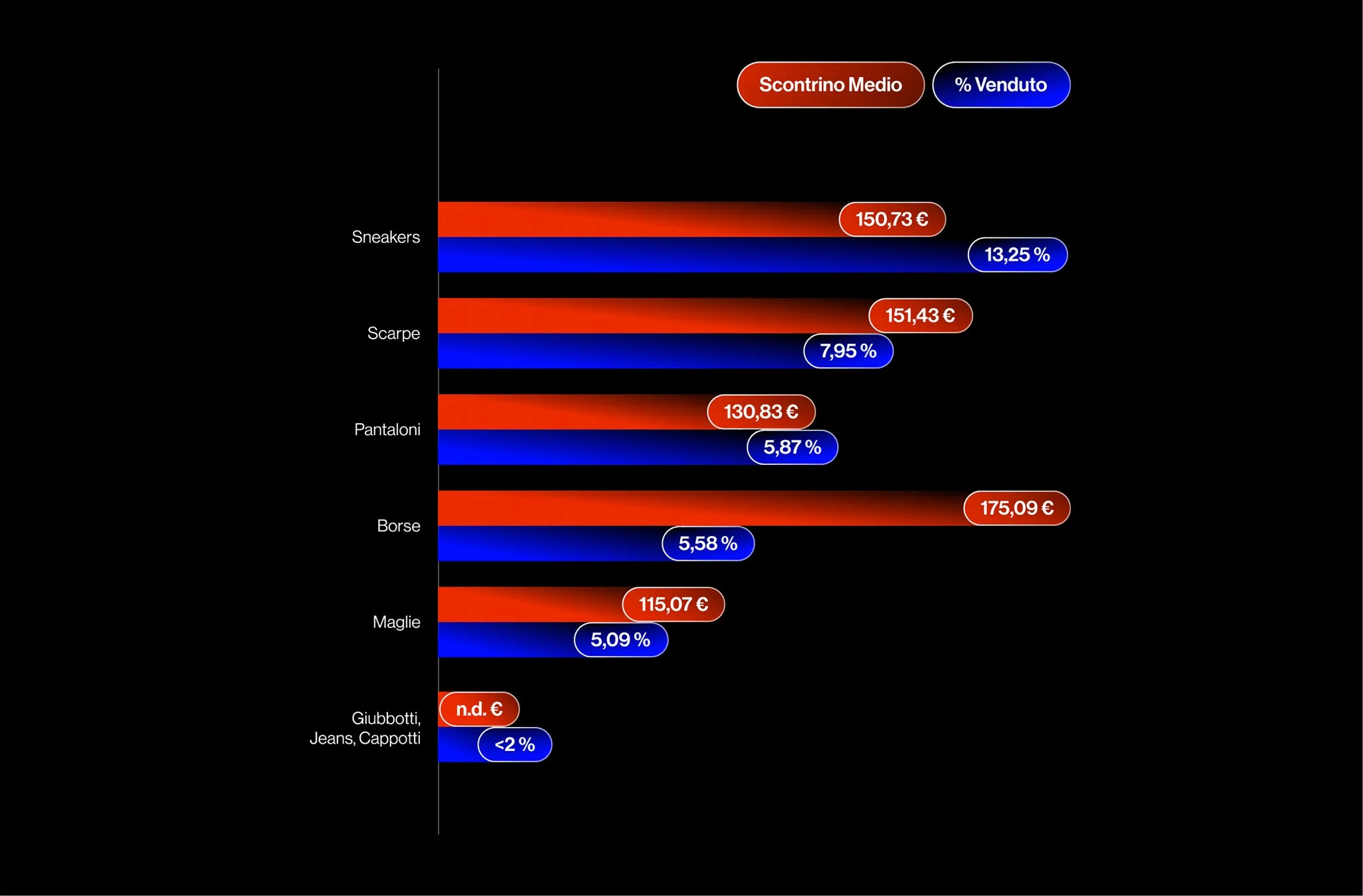
The numbers speak for themselves: sneakers, shoes and bags aren’t just the best-selling categories, they’re often a customer’s first point of contact with a store.
These are the items that sell first each season, especially in Spring Summer. Even when the weather is unpredictable and collections don’t take off, these categories carry the rest.
Category. % Sold. Average order value
Sneakers 13.25% | average order value €150.73 — Shoes 7.95% | average order value €151.43 — Trousers 5.87% | average order value €130.83 — Bags 5.58% | average order value €175.09 — Knitwear 5.09% | average order value €115.07 — Jackets, jeans, coats <2% | average order value n/a
April tested us, but we learned something
April 2025 was tough.
The Spring Summer season didn’t take off as expected, and the fashion sector paid the price.
But it’s in the most unstable moments that the most important patterns emerge. We noticed that stores which had already worked hard on photography, product selection, advertising flow and strategic structure stayed on course.
Those who hadn’t set anything up saw their numbers collapse.
Private labels aren’t an alternative: they’re a strategy
We excluded private labels from the previous data, but they deserve a closer look. More and more merchants are realising that it’s not just about selling, but about building value around a strong identity. Private labels work because:
- They allow for greater operating margin and direct control over pricing.
- They step outside the price war, because there’s no direct comparison.
- They build distinctive branding, positioning and recognisability.
They’re not a secondary option. They’re the heart of a conscious ecommerce business.

What it takes to stay standing in 2025
There are operational truths every merchant today needs to accept.
These aren’t opinions, but the consequences of data read every single day.
- Platform
Shopify today is the only ecosystem capable of supporting an ecommerce business that wants to grow. It’s stable, up to date, intuitive and ready for any scale. - Photography
- The difference between conversion and bounce rate is often a single shot.
Anyone who neglects their photography is out of the game today. - Advertising and data interpretation
- Meta and Google attribute far more conversions to themselves than they actually generate. It’s essential to find the right balance when interpreting data, without being fooled by the “inflated” ROAS these platforms report.
- AI integration
- Artificial intelligence isn’t a shortcut. It’s a tool.
Automating, analysing, supporting the team: everything needs to happen at the right points, with method and strategy. - Product identity
- Having a clear identity matters more than having famous brands.
Every product must speak the same visual and narrative language.
It’s this consistency that audiences recognise and reward.

Conclusion: selling isn’t enough, you need to say something
The data tells far more than numbers. It tells a direction. And that direction rewards:
- The categories that capture desire first (sneakers, shoes, bags).
- Strong, well-positioned brands (Autry, DonDup, Premiata).
- Merchants who make conscious choices, building identity and control.
The truth is this: the market doesn’t reward whoever sells the most, but whoever builds the best. And anyone who wants to build in 2025 must start from structure, vision and consistency.