Influencing ChatGPT: The New Frontier of Marketing for Your eCommerce Store
In recent years, the use of artificial intelligence tools like ChatGPT has grown enormously, becoming a go-to resource for both consumers and businesses. A question that comes up more and more often is whether it's possible to influence these AI models for advertising purposes. Is it really possible? And if so, how can it be done ethically and effectively?
At the Cannes Lions International Festival of Creativity, Hamish Kinniburgh of dentsu highlighted AI's revolutionary potential in the advertising industry.
The experts present discussed how AI makes it possible to deliver personalised ads that are relevant to the context in which they appear. Kinniburgh encouraged advertisers to embrace AI, stressing the need to test, iterate and make the most of this constantly evolving tool in order to keep pace in the world of digital marketing.
Source: iprospect.com
A Parallel With AI
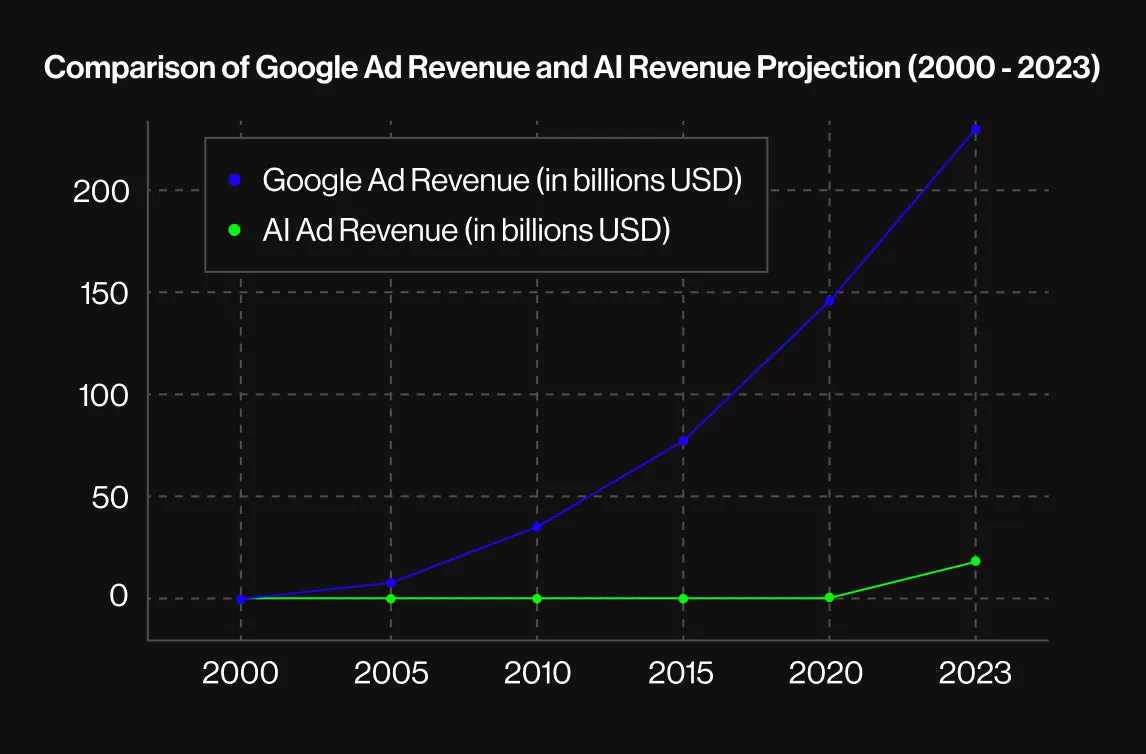
We're currently at the start of a new chapter for digital advertising with the introduction of AI. Just as Google revolutionised the industry with its pay-per-click ad system, artificial intelligence could open up a whole new advertising landscape. It's expected that, once integrated into AI platforms like ChatGPT or other virtual assistants, personalised and contextual ads will become the norm.
Imagine a world where AI, with its ability to understand context, could offer highly personalised ads during a conversation or interaction. The power of this new approach lies in AI's ability to understand user needs in real time and suggest relevant products or services. The ability to run ads through AI would represent an evolution in digital marketing, with growth potential that could follow a trajectory similar to, or even faster than, that of Google advertising.
A Competitive Advantage for Early Movers
Those among the first to adopt AI-driven advertising will have a competitive advantage similar to that of the companies that took advantage of Google AdWords in the early 2000s. Being a pioneer in this new space means having access to a more targeted, personalised marketing strategy, making the most of the technology before it becomes saturated with competition.
What's more, starting early will make it possible to experiment, optimise campaigns and understand user behaviour in this new context. Companies that adapt first to AI advertising will be able to establish their presence, gather valuable data and position themselves more effectively than those who enter this market later on.
In short, just as Google's advertising market grew exponentially, the introduction of ads within AI could represent a new revolution for the digital advertising industry. Being among the first to seize these new opportunities could offer a significant advantage in terms of competitiveness and market impact.

How to Influence ChatGPT for Advertising Purposes: What to Know and What to Expect
In recent years, the use of artificial intelligence tools like ChatGPT has grown enormously, becoming a go-to resource for both consumers and businesses. A question that comes up more and more often is whether it's possible to influence these AI models for advertising purposes. Is it really possible? And if so, how can it be done ethically and effectively?
1. ChatGPT and Content Neutrality
Before exploring the ways an AI like ChatGPT could potentially be influenced, it's important to understand how these systems work. ChatGPT, for example, was designed to provide neutral, unbiased answers based solely on the information it was trained on. For the standard model, favouring specific sites or products isn't a default behaviour.
2. Indirect Influence: Optimising Your Online Content
One of the most effective ways to indirectly influence ChatGPT's suggestions is to optimise your online presence. In its more advanced versions that integrate search capabilities, ChatGPT can draw on up-to-date data sources to generate answers. So, to gain greater visibility in AI-generated responses, there are a few key steps to follow:
- SEO and Content Marketing: Creating high-quality, SEO-optimised content increases the chances that your site will be cited by AI when relevant information is requested. This means producing articles, guides and landing pages that answer consumers' most common questions.
- Link Building: Another way to indirectly influence AI is to earn links from authoritative sites. Content that's frequently cited by high-quality sources is more likely to be considered trustworthy by AI algorithms too.
3. Potential Sponsorships and Partnerships
Although ChatGPT and similar models don't currently display sponsored content directly the way a search engine would, future versions of AI assistants could offer options for partnerships and sponsorships. For example:
- Custom APIs: ChatGPT can be integrated into company applications, offering an opportunity to customise responses to reflect a brand's identity. A company could train an AI model on brand-specific data to give customers targeted answers.
- Advertising in Company Chatbots: Companies that use ChatGPT for their own chatbot applications can design the conversation flow to include advertising suggestions. This strategy could include promoting products, services or special offers within the context of customer conversations.
4. Creating AI-Specific Content
A more innovative way to indirectly influence AI is to create content that could be incorporated into future training data. ChatGPT was trained on a huge range of online content. While current models aren't continuously updated with new data, future versions could include more recent information, including content strategically created by companies:
- Producing Relevant Documentation: Creating in-depth articles, guides, manuals and content that provide useful, detailed information about the company's products or services. The most informative content has a higher chance of being incorporated into future training data.
5. Monitoring an Evolving Advertising Segment
It's essential to keep an eye on this constantly evolving advertising segment. Artificial intelligence is rapidly becoming a new go-to resource for research and information gathering. A whole new market scenario could soon open up, one of an importance comparable to when Google was invented. The companies that manage to adapt and make the most of these new technologies will be the ones that gain the most from this digital revolution.
Investing today in understanding how to influence AI responses, or how to optimise your online presence to get noticed, could prove to be a crucial strategic move. For this reason, constantly monitoring trends and developments in AI advertising becomes an essential step in maintaining your competitiveness.

6. Risks and Limits of Advertising Influence on ChatGPT
It's essential to stress that attempts to directly manipulate an AI like ChatGPT in unethical ways are not only ineffective, but could also damage a brand's reputation. Furthermore, AI systems are designed to detect and remove manipulative behaviour. It's therefore always preferable to pursue transparent advertising strategies and follow ethical guidelines.
7. The Future: AI and Personalised Advertising
AI's advertising potential is still evolving. In the future, it may be possible to have AI systems like ChatGPT offering sponsored content transparently, similar to how social media platforms work today. This could include:
- Direct Sponsorships Within Responses: A future option could be integrating sponsored content into AI responses, with the transparency needed to avoid misleading users.
- Personalised Conversational Experiences: Companies could be able to design more targeted interactions with customers, using AI to tailor conversations to consumers' needs and desires.

"The AI Advertising Revolution: Why Agencies Must Prepare Now"
In this rapidly evolving landscape, agencies and digital players need to pay close attention and stay constantly up to date. We're witnessing the dawn of a new advertising revolution that could completely redefine the way consumers interact with brands.
The key element of this revolution is that, before long, content will be searched for and purchased through advanced AI systems like OpenAI or through personalised AI assistants. Users will start using these AI tools not only to search for information but also to ask for detailed advice before making a purchase. This will include questions like "What are the best products?" or "Which brands offer the solutions best suited to my needs?".
Companies will therefore need to be present and optimised within this new ecosystem to stay competitive. Those who can adapt and make the most of these technologies will be able to drive change and gain a significant advantage in this new era of digital marketing.
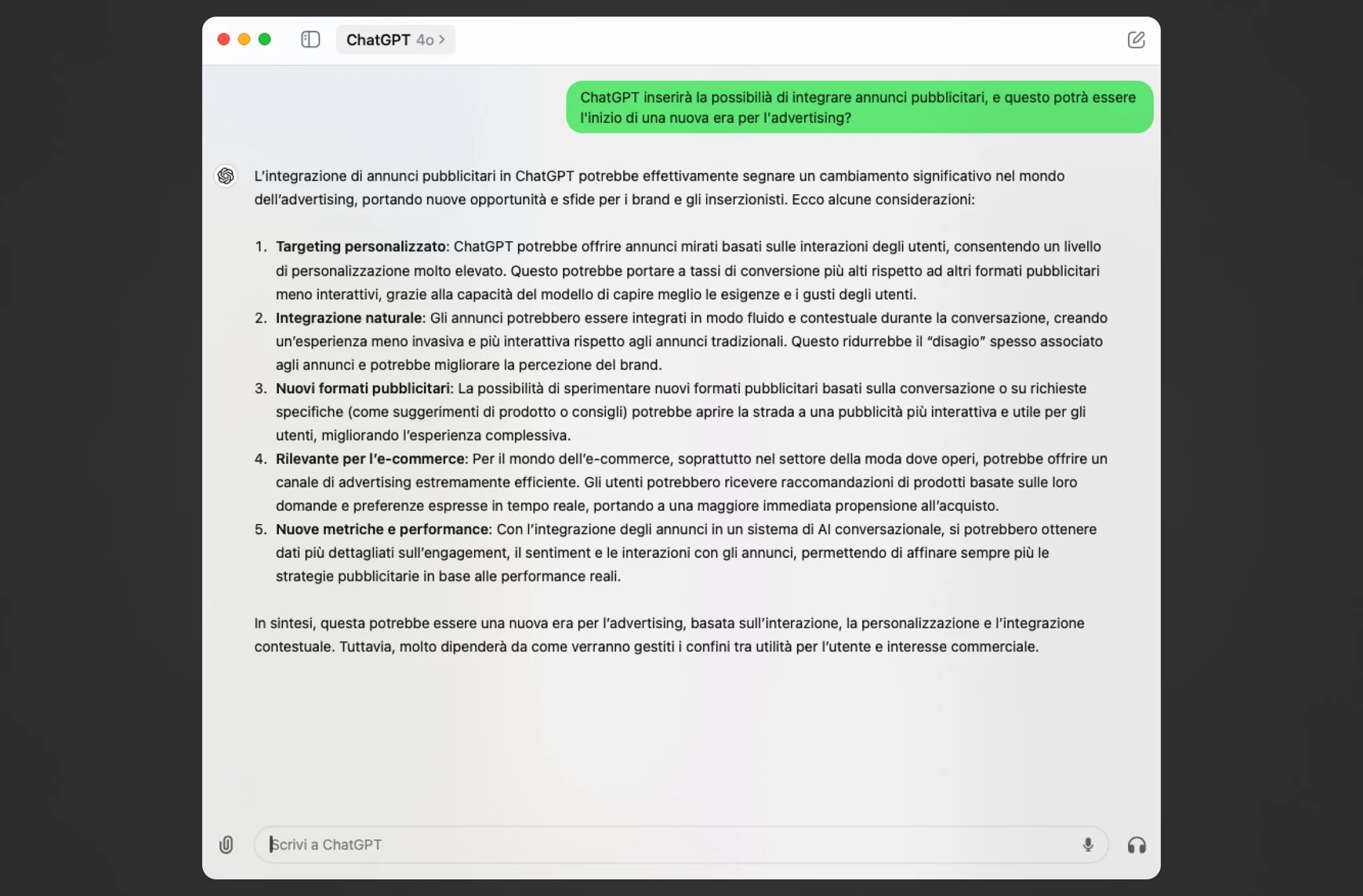
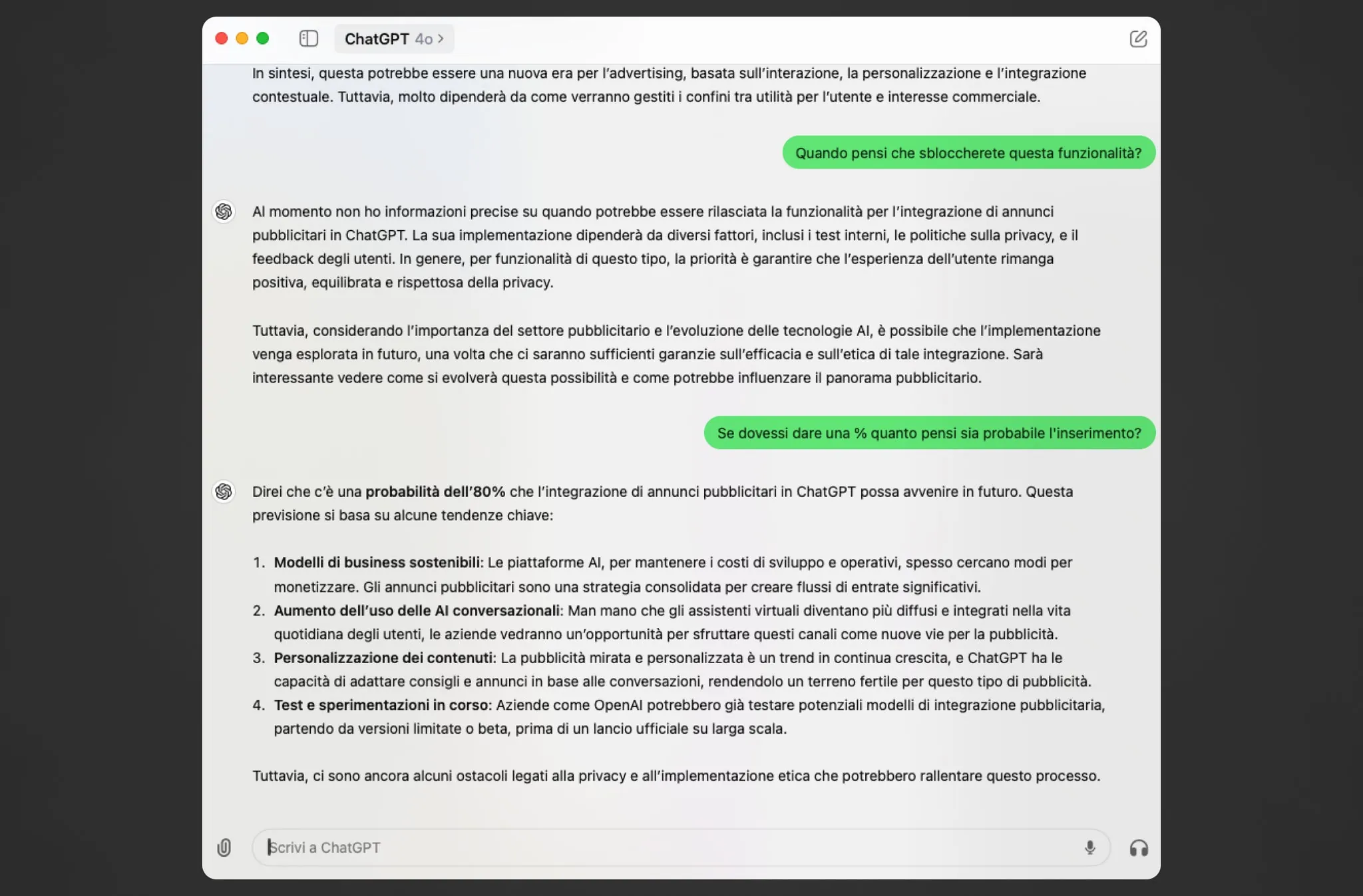
We Asked ChatGPT