New Balance: Between Heritage and Innovation, America's Success Story in Fashion and Sport
Why New Balance Is a Unique Case
In the global footwear landscape, New Balance is a rare exception. Unlike other brands that built their fortunes on aggressive campaigns and endless collaborations, the American brand chose a different path: betting on authenticity, construction quality and a strongly recognisable identity. Its story begins as a maker of orthopaedic footwear, designed to provide support and comfort, but over time it evolved into a narrative capable of uniting sporting performance with lifestyle aesthetics. Today New Balance is a phenomenon that has won over different generations, maintaining a rare balance between heritage and contemporary relevance.
The brand's journey begins in running and athletics, where New Balance made its name through technical innovation and a focus on comfort. Unlike competitors more focused on marketing, the brand built its reputation on product quality. Over the years, models such as the 990 series and the 574 moved off the track and into the urban imagination, becoming style icons that cut across categories. This evolution allowed the brand to transform from a simple sportswear manufacturer into a global cultural symbol, adopted by runners and fashion enthusiasts alike.
Record Growth in Recent Years and Current Positioning
Over the past five years, New Balance has posted record-breaking figures, surpassing six billion dollars in global revenue and positioning itself as one of the fastest-growing sports brands. This success stems from a strategy that combines the relaunch of iconic historic models, targeted collaborations with designers and artists, and a strong footing in contemporary lifestyle culture. Today the brand occupies a unique space: perceived as authentic, technical and fashionable all at once. A combination that allows it to challenge giants such as Nike and Adidas, not by copying their playbook, but by leaning into its own uniqueness.

The Brand's Roots: Heritage and Authenticity
New Balance is one of the few sports brands to have built its success while remaining absolutely consistent with its origins. In a market often dominated by hard-sell marketing logic, the American brand chose a different route: basing its development on authenticity, quality and continuity with the values that made it unique. This approach turned the concept of "heritage" into a strategic lever capable of setting New Balance apart from the industry's giants and reinforcing its credibility with consumers across generations.
Founded in 1906 in Boston, New Balance started out as a company specialising in innovative orthopaedic arch supports, designed to provide greater stability and comfort. This experience shaped the philosophy that still guides the brand today: developing technical products that meet real needs. In the 1970s, as running exploded as a global phenomenon, New Balance introduced its "Made in USA" line, synonymous with local manufacturing, rigorous quality control and artisanal care. This choice strengthened its bond with the American market, turning the brand into a symbol of reliability and national identity — a positioning that still sets it apart worldwide today.
Founding Values: Quality, Comfort, Performance
Three words define New Balance's vision: quality, comfort and performance. Every collection is developed to meet high technical standards without sacrificing the end user's experience. The brand has built its reputation not so much on endorsements or aggressive campaigns, but on its ability to deliver shoes that last and that combine function with style. This consistency has earned it the trust of professional athletes and amateur runners alike, and later, of fashion enthusiasts who see in the brand's iconic models a perfect balance between performance and lifestyle.
Beyond the technical side, New Balance has always valued its relationship with sporting and local communities. Its models are not designed solely for the global market; they often emerge from the specific needs of athletes and urban contexts. This direct connection has reinforced the brand's image as an authentic brand close to real people, far removed from purely commercial logic. Over recent decades, New Balance sneakers have become an integral part of urban subcultures, youth movements and creative scenes, cementing an identity that blends sporting roots with cultural relevance. Today the brand is recognised not only for its performance, but for its ability to be a symbol of cross-generational authenticity, capable of uniting different generations and lifestyles.

The Recent Growth Strategy
In recent years, New Balance has shown how a heritage brand can reinvent itself without losing its authenticity. Its growth has not been the result of a race towards aggressive marketing, but of a solid strategy that has balanced heritage, sporting performance and fashion lifestyle. This approach has turned New Balance into one of the most interesting brands in the industry, capable of challenging giants like Nike and Adidas while maintaining a strong sense of identity.
Record Sales and Global Targets for 2023–2024
The brand has posted record revenues, surpassing the six-billion-dollar threshold globally. 2023 was a year of consolidation, with double-digit growth driven by relaunched iconic models and new collections that successfully blended tradition and innovation. The goal for 2024 is to further expand market share, focusing both on strengthening digital channels and on wider retail distribution. The strategy is not just about volume, but about consolidating New Balance's positioning as a premium brand recognised worldwide.
Balancing Sporting Performance and Fashion Lifestyle
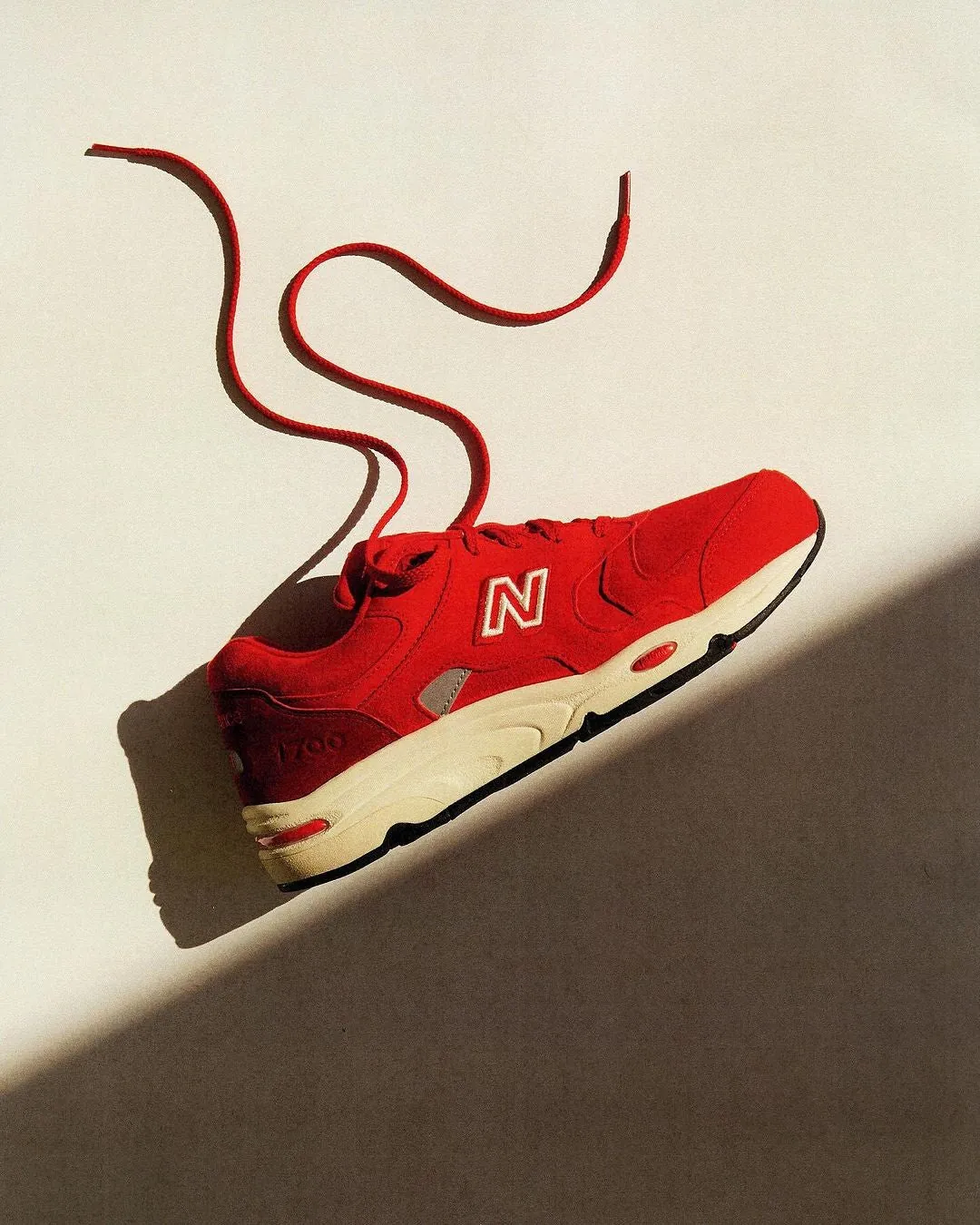
One of the key factors behind its success has been the balance between sport and lifestyle. On one hand, New Balance remains a brand deeply tied to running and technical performance, investing in research and innovation. On the other, it has managed to turn models such as the 990 and the 550 into genuine fashion icons, adopted by influencers, celebrities and urban communities. This dual identity has made the brand cross-generational, able to speak to both athletes and young consumers in search of style and cultural identity.
International Expansion and Strengthened Distribution
The recent strategy has also seen a strong focus on international expansion. Beyond the American and European markets, New Balance has stepped up its presence in Asia, with particular attention to China and Japan, where the brand enjoys a loyal following. At the same time, the strengthening of distribution has focused on experiential retail and integrated digital channels, ensuring continuity between online and in-store purchases. Omnichannel has become a cornerstone: offering customers a smooth, consistent journey in every context, reinforcing the brand's identity on a global scale.
Brand Innovation and Digitalisation
Over the past decade, New Balance has accelerated its digital transformation, aware that growth can no longer depend solely on traditional distribution. The brand has invested in proprietary eCommerce platforms and in a new philosophy of direct consumer engagement, positioning itself not just as a sneaker manufacturer, but as a digital and cultural ecosystem. This vision has enabled it to meet the needs of an increasingly fluid audience, one that moves seamlessly between the physical and online worlds.
The online channel is no longer simply a sales space, but an experiential showcase. New Balance's website integrates storytelling, interactive lookbooks and editorial sections, turning the purchase into a guided journey. Personalisation features, such as advanced filters and product suggestions, reduce decision fatigue, while membership programmes strengthen the sense of community. Alongside this, the brand makes strategic use of platforms such as Shopify Plus and marketing automation tools to build direct, lasting relationships with its customers.
Sponsorships and Collaborations with Athletes and Sports Teams
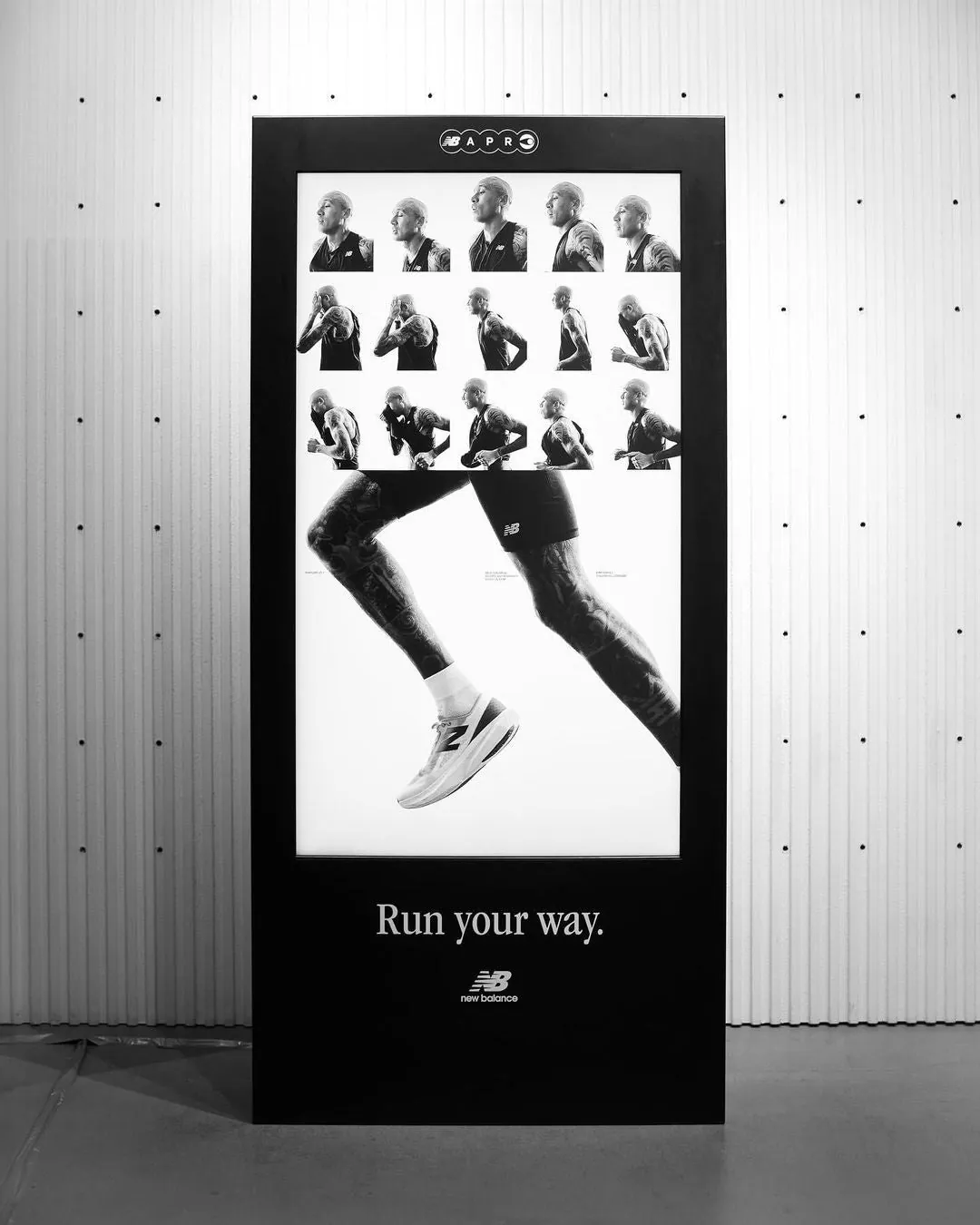
The brand's authenticity remains anchored in the world of sport. New Balance sponsors top-level athletes in running, baseball and basketball, reinforcing its image as a technical brand. Collaborations with teams such as the Boston Celtics or partnerships with international marathons strengthen its association with performance. This approach allows it to maintain sporting credibility even as the brand expands into lifestyle, avoiding the risk of being seen purely as a fashion label.
The Approach to Gen Z and Millennial Audiences
Gen Z and Millennials are at the heart of the brand's recent strategies. New Balance has managed to speak to these audiences through witty campaigns, collaborations with emerging artists and creative use of social media. The focus is not just on selling, but on creating a shared language. Memes, capsule collections and limited drops generate a sense of belonging and desirability — key elements for an audience seeking authenticity and connection with brands.
New Balance and Contemporary Culture
New Balance's evolution does not stop at sport: the brand has become a cultural symbol, capable of influencing trends and aesthetic language. Its ability to embed itself in urban contexts and creative subcultures has reinforced a unique positioning, between heritage and innovation.
Iconic Sneakers and the Return of Retro Models
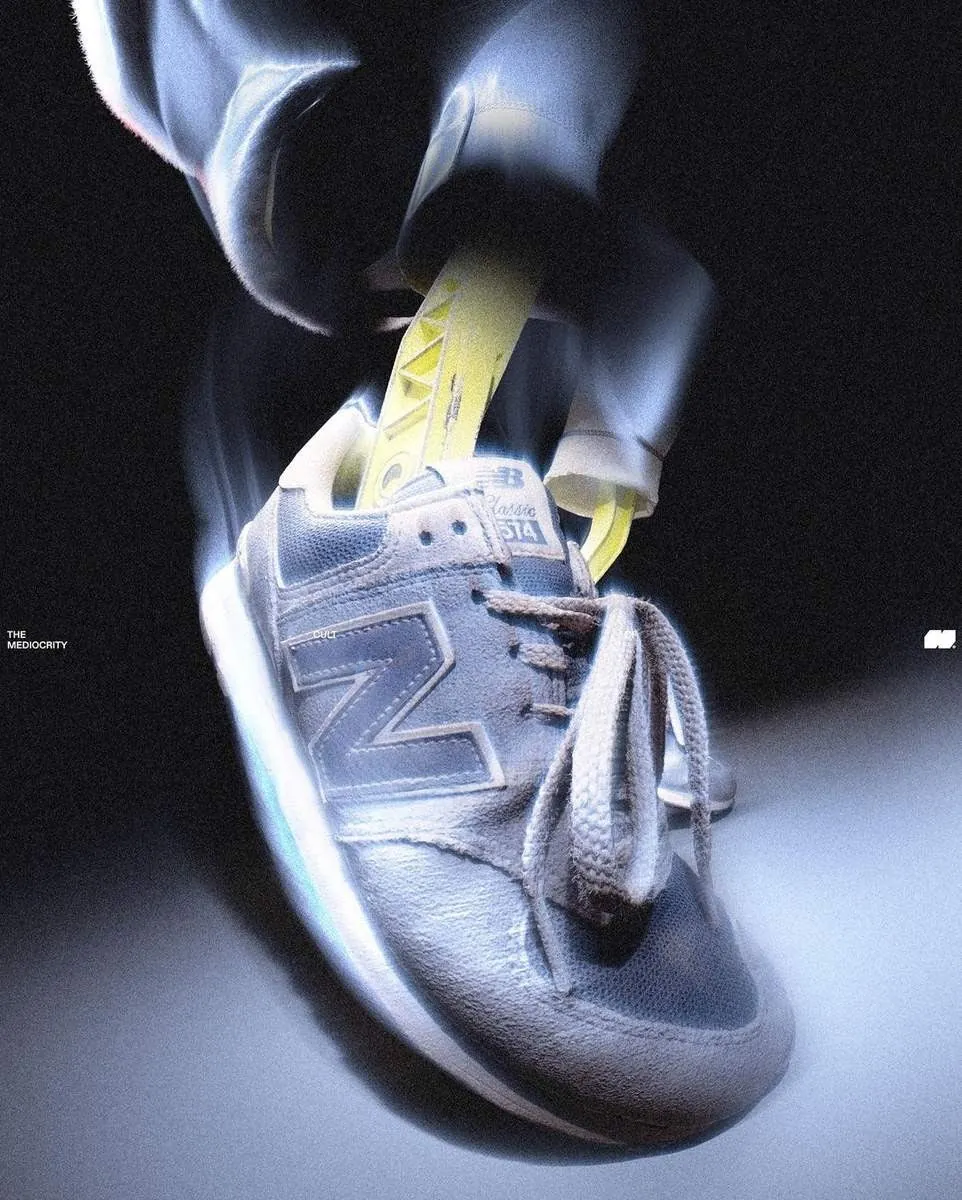
Models such as the 990, 550 and 574 have become global icons. The relaunch of retro silhouettes tapped into growing demand for authenticity, bringing historic designs back to market reinterpreted with contemporary materials and colour palettes. These moves have allowed the brand to capitalise on nostalgia without appearing dated, building bridges between different generations of consumers.
The Global Community and the Role of Collaborations with Designers and Fashion Brands
Social media has turned New Balance into a participatory brand. Platforms are not just promotional channels, but spaces for dialogue with global communities. Challenges, user-generated content and visual storytelling all help build a collective narrative. This bottom-up approach brings the brand closer to consumers and reinforces its sense of authenticity.
Another pillar of the strategy is the world of collaborations. From Aimé Leon Dore to Junya Watanabe, New Balance has chosen partners who share its values of quality and innovation. These capsule collections have had a dual effect: broadening its relevance within the fashion system and reinforcing its image as a brand able to move nimbly between sport and fashion. Collaboration thus becomes not just a commercial exercise, but a cultural laboratory that enriches the brand's identity.
Innovation and digitalisation have allowed New Balance to strengthen its sporting roots while projecting itself into contemporary culture. The combination of advanced eCommerce, credible sponsorships and cultural initiatives has made the brand a unique case, able to grow without betraying its own essence.

Lesson Learned: The Made in Evolve Approach
New Balance's experience shows that contemporary success does not come from chasing every trend, but from knowing how to translate authentic values into a digital language that today's consumers understand and engage with. From this perspective, the Made in Evolve approach embodies exactly this principle: bringing together heritage, design and technological innovation not as separate elements, but as parts of a single ecosystem in which brand identity becomes a fluid, consistent and recognisable experience. It's not simply about building a high-performing eCommerce site, but about designing a digital universe in which every touchpoint — from checkout to visual communication — carries meaning and narrative continuity.
Take, for example, Evolve's work for Champion Europe: a replatforming project that goes well beyond a technical migration. Like New Balance, Champion is a brand with a solid history, rooted in American sportswear and in values of authenticity and quality. Our goal wasn't just to modernise its digital presence, but to reimagine its heritage for a contemporary audience, building an eCommerce site that faithfully mirrored its identity while speaking to today's European audience. This work starts by listening to the brand and deeply understanding its soul, then translating that into design choices, digital architecture and the shopping experience.
For Evolve, heritage is not a museum piece. It's a living narrative that must be expressed at every touchpoint. For Champion, as for New Balance, we worked on the symbols, aesthetic codes and original values — the C of the logo, the sturdy fabrics, the sporting legacy — turning them into guidelines for the eCommerce site, campaigns and content. The result is a bespoke digital identity that loses none of its authenticity — if anything, it amplifies it, making it tangible and engaging for the end user.
Implementing Quick Add, Smooth Checkout and Decision Minimalism
Another central aspect is decision minimalism. Today's shoppers, especially in the lifestyle and sports segments, want to buy without friction. Features such as quick add, one-click purchase and streamlined checkout are no longer optional — they are prerequisites for a modern experience. At Evolve, we systematically build these tools into our digital projects, as we did for Champion, ensuring fast purchase journeys that reduce cart abandonment without sacrificing brand identity. The strategy isn't about piling on features, but about the fluidity of the process, striking the perfect balance between operational simplicity and showcasing brand identity.
Creating Hyper-Personalised Experiences with Symbolic Value (Gen Z Style)
Generation Z — the real target audience for brands like Champion and New Balance — wants more than a product: it seeks personalised experiences loaded with meaning. Evolve meets this need by integrating AI and marketing automation to offer contextual recommendations, suggested outfits and browsing journeys built on user behaviour. But the real added value lies in weaving in symbolic elements: graphics, visual storytelling, references to the brand's history that turn a simple transaction into an act of digital self-expression. This is where heritage and hyper-personalisation meet: the brand becomes a language through which young people build and communicate their own identity.
For Evolve, design is not just aesthetics: it's the visual and functional translation of brand identity. We use solid design systems to ensure consistency across eCommerce, communication and physical touchpoints. Scalable technologies such as Shopify Plus, combined with automation systems and AI solutions, become the vehicles for this strategy: they enable performance without ever overshadowing the brand's soul. The goal is to build recognisable, high-performing platforms ready to support long-term growth — much like New Balance's own journey.
Key Lessons from New Balance and Champion
The cases of New Balance and Champion offer concrete lessons on how to integrate tradition and innovation within a coherent digital ecosystem. Both brands show that identity is not lost through digital transformation, but strengthened when translated into smooth, relevant experiences. Heritage and innovation are not opposing poles, but two complementary forces which, when managed with method and vision, generate tangible value and competitive differentiation.
Heritage + Innovation as the Key to Longevity
The most important lesson is that brand longevity depends on the ability not to choose between roots and future, but to make them coexist. Heritage means authenticity, credibility, recognisability. Innovation means staying relevant, offering fast, personalised experiences aligned with new digital codes. The balance between these elements — which Evolve pursues in every project — is what allows a brand to last, grow and compete even in mature markets.
The American Model That Unites Sport, Fashion and Authenticity
New Balance and Champion embody a successful American model that knows how to unite different worlds: sport, fashion, urban culture and authenticity. Their strength has been turning technical performance and tradition into global cultural symbols, adopted by diverse communities. The lesson for Italian and international fashion brands is clear: there's no need to chase the trend of the moment, but rather to build a solid identity and translate it into frictionless digital experiences. This is exactly the philosophy Made in Evolve applies: turning digital marketing into an engine of sustainable growth, where technology serves the storytelling and heritage becomes the foundation of every innovation.
At Evolve, we study and apply the fundamentals of unique brands like New Balance: we start from history, listen to the present, and build digital platforms ready for the future. Because a brand isn't just what it says — above all, it's the experience it delivers.